
safety · pregnancy · clinical
Medical cannabis and pregnancy — why the answer is no, and what alternatives exist
Last reviewed · Reviewed by Dr. Medical Director — Docto24 panel
Cannabinoid therapy in pregnancy is consistently deferred by SA Section 21 prescribers. Here is the evidence basis for that position and what symptomatic alternatives exist for the relevant indications.
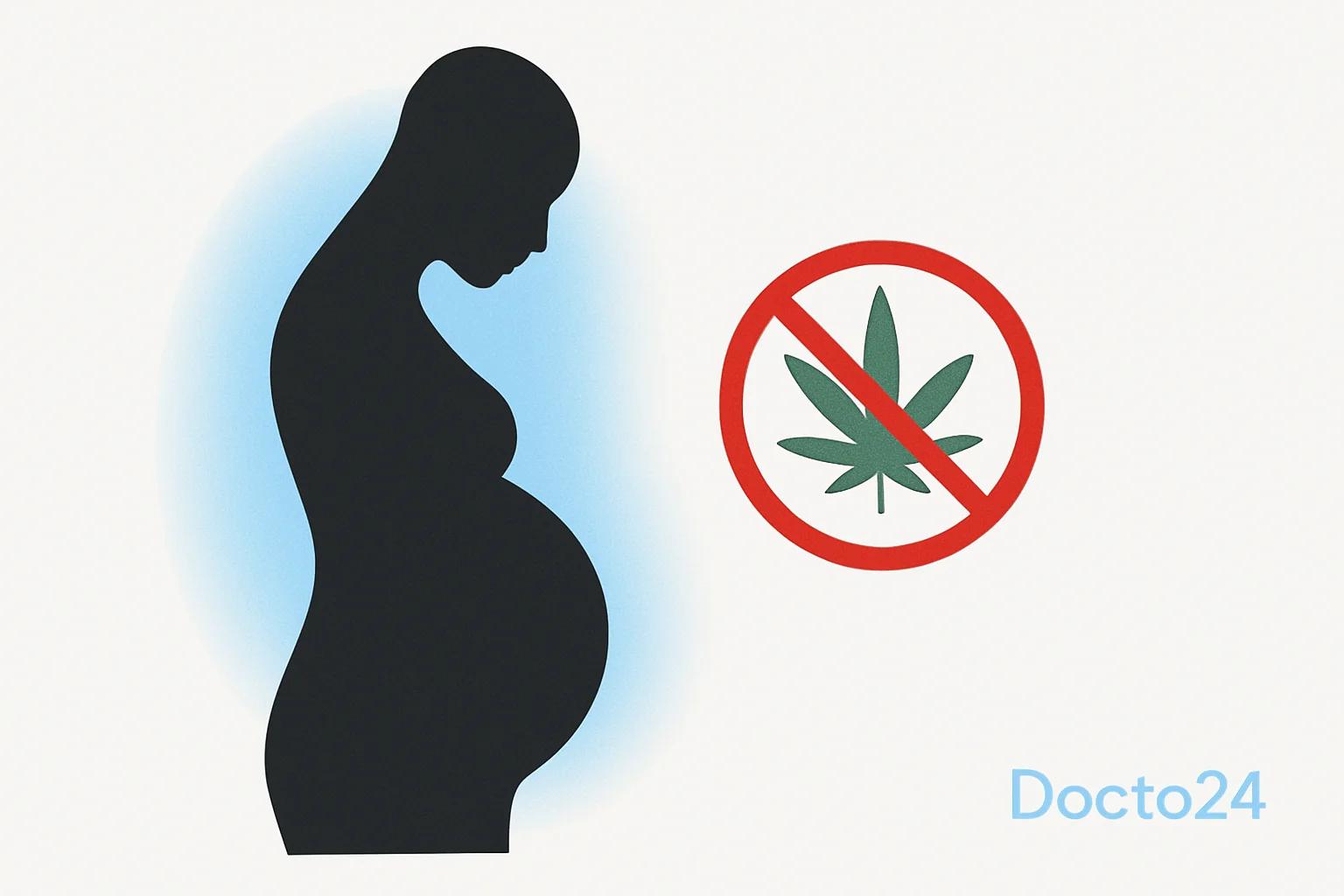
When pregnant patients enquire about medical cannabis through Docto24, the consistent clinical answer from our doctor panel is to defer cannabinoid therapy for the duration of the pregnancy and breastfeeding period. This is not unique to Docto24 — it is the position of every major obstetric and SA medical body. The question patients reasonably ask is: why?
What we actually know
THC crosses the placenta and reaches the fetus. Concentrations in fetal tissues are typically lower than maternal but measurable. THC is also detectable in breast milk for hours to days after maternal use. Both routes deliver cannabinoid exposure to a developing nervous system.
Observational cohort studies have associated maternal cannabis use with: lower birth weight, possible attention and behavioural differences in childhood, possible association with preterm birth. The studies have substantial limitations (recall bias, polysubstance use, socioeconomic confounders) — they are not high-quality evidence of harm. But "we do not have high-quality evidence of harm" is not the same as "we have evidence of safety". For a developing nervous system over 9 months, the precautionary position is to defer.
CBD has fewer studied effects but also fewer studied safety outcomes in pregnancy. The current scientific position is the same: insufficient safety data, deferral pending more data.
Why "but I have a serious indication" does not change this
Patients with chronic pain, severe anxiety, or refractory insomnia who were stable on cannabinoid therapy before pregnancy understandably worry about discontinuing. The Docto24 doctor will work with you to taper safely and to find pregnancy-safe alternatives — not because cannabinoid therapy is unequivocally harmful, but because cannabinoid therapy in pregnancy is not adequately studied and the conventional alternatives have safety profiles that are.
The exception sometimes raised is hyperemesis gravidarum (severe pregnancy-related nausea). Even there, current obstetric guidance prefers ondansetron, doxylamine-pyridoxine, or other established anti-emetics over cannabinoid therapy. The case for cannabinoid use in pregnancy hyperemesis is genuinely thin and is not the typical Section 21 framework.
Pregnancy-safe alternatives by indication
**Chronic pain** — paracetamol remains pregnancy-compatible at standard doses. Physiotherapy, structured movement programmes, and cognitive-behavioural pain-management approaches are all appropriate. NSAIDs are restricted, particularly in the third trimester.
**Insomnia** — sleep hygiene and CBT-I are first-line and entirely pregnancy-compatible. Diphenhydramine and doxylamine have established pregnancy use; benzodiazepines are generally avoided.
**Anxiety** — psychotherapy is the foundation. Some SSRIs (sertraline notably) have substantial pregnancy data and continued use during pregnancy is often appropriate; the doctor or psychiatrist managing your anxiety care will discuss the specific risk-benefit.
**Nausea** — pregnancy-specific anti-emetic ladders exist and should be the framework, not cannabinoid adjunct.
After the pregnancy ends
Once pregnancy and breastfeeding conclude, the cannabinoid pathway becomes available again on the same Section 21 framework. Patients who deferred during pregnancy can re-enter the assessment process post-partum or post-weaning, and the doctor will reassess the indication, current treatment, and whether cannabinoid therapy is appropriate at that point. Pregnancy is a defined period of deferral, not a permanent disqualification.
Glossary terms in this article
Related conditions
Researching whether the Section 21 cannabis pathway is right for you? The eligibility assessment takes around five minutes.
START ELIGIBILITY ASSESSMENT