
Condition · ICD-11 MG30.01
Fibromyalgia
Reviewed by the Docto24 clinical team · Pain Medicine · Last updated · Published
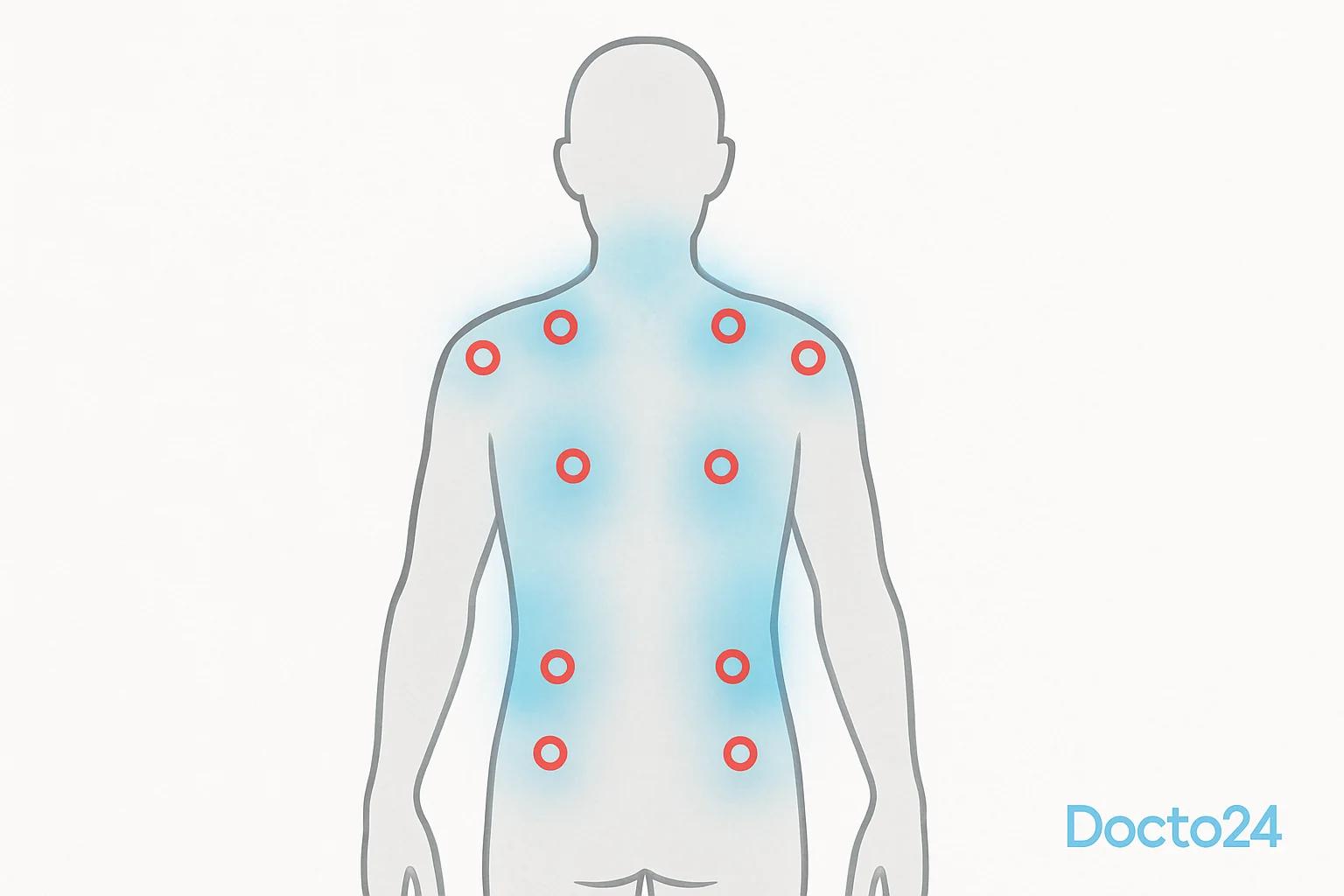
Fibromyalgia is a chronic pain syndrome characterised by widespread musculoskeletal pain, fatigue, sleep disturbance, and cognitive fog ("fibro fog"). It is one of the most commonly enquired-about indications for medical cannabis in South Africa, in part because conventional first-line therapy — duloxetine, pregabalin, low-dose tricyclics, and graded exercise programmes — often delivers only partial benefit and frequently causes intolerable side effects. Cannabinoid-based therapy is not first-line. It is sometimes considered as an adjunct after a structured trial of conventional options has been completed and documented.
What the evidence says
Walitt et al (2016 Cochrane) reviewed cannabinoids for fibromyalgia and found low-quality evidence for nabilone reducing pain and sleep disturbance, with cautious framing because of small trial sizes. Sagy et al (2019) reported a large prospective Israeli cohort showing meaningful pain and sleep improvements at 6 months under medical-cannabis prescriptions. The EULAR 2016 guideline does not endorse cannabinoids as standard fibromyalgia therapy but acknowledges patient interest. The honest summary: the evidence is moderate at best, but for patients failing conventional options, a carefully titrated trial under doctor supervision is reasonable.
How the doctor will evaluate you
You will be asked for the diagnostic basis (typically a rheumatology or pain-medicine letter), the conventional medications already trialled with response and reasons for discontinuation, current sleep and exercise patterns, and any psychiatric co-morbidity (depression and anxiety frequently co-exist and influence both treatment choice and dosing). A balanced THC:CBD or CBD-leaning formulation is usually the starting point, with conservative titration to manage daytime function. Doctors generally avoid initiating cannabinoid therapy in fibromyalgia patients who have not first attempted graded exercise — without that foundation, the cannabinoid effect tends to plateau quickly.
When to see a doctor urgently
- Severe untreated depression or active suicidal ideation — psychiatric stabilisation comes first
- History of psychosis or strong family history — THC components may be unsuitable
- Pregnancy or breastfeeding — cannabinoid therapy is deferred
- New focal neurological symptoms — exclude alternative diagnosis (MS, neuropathy) before attributing to fibromyalgia
If any of the above apply, seek in-person medical care — do not wait for a remote Section 21 consultation.
The South African Section 21 pathway
Fibromyalgia is regularly evaluated under the SA Section 21 pathway as a refractory chronic-pain indication. Applications are stronger when supported by a documented diagnostic workup, a structured trial of duloxetine and pregabalin, and a current functional baseline (e.g. PROMIS or fibromyalgia impact questionnaire). Authorisations are typically time-limited and re-assessed at the 6-month renewal against measurable function — not just symptom relief.
Frequently asked
- Will cannabinoids replace my duloxetine and pregabalin?
- Not automatically. The doctor will usually keep your current regimen during the cannabinoid trial and only consider tapering once a response is established. Stopping conventional medications first risks losing the partial benefit you already have.
- How quickly will I know if it works for fibromyalgia?
- Fibromyalgia responses are typically slower than acute pain. The doctor will usually re-evaluate at 6–8 weeks of stable dosing. If pain, sleep, and daily function have not improved measurably by then, the regimen is changed or stopped rather than persisted with.
- Will it help with the "fibro fog"?
- Mixed. CBD-leaning regimens are sometimes well tolerated cognitively. THC-dominant regimens can worsen brain fog at higher doses, particularly daytime. Clear cognitive endpoints — for instance, work-task tracking or a brief monthly cognitive self-assessment — are part of how the doctor will measure benefit versus harm.
- Should I exercise while on cannabinoid therapy for fibromyalgia?
- Yes — graded exercise is recommended in fibromyalgia (unlike ME/CFS, where it is contraindicated). The cannabinoid trial works best as part of a package that includes paced movement. Patients who use the cannabinoid as an excuse to stop activity tend to lose function faster; patients who maintain or grow activity tend to do best.
- Will my medical aid cover any of this?
- Most SA medical schemes do not cover Section 21 cannabinoid medication itself. The doctor consultation may be partly claimable depending on your scheme — confirm directly with your scheme. Section 21 SAHPRA fees and the medication cost are typically out-of-pocket. We disclose all fees up-front before you commit.
Related conditions
Glossary — terms used on this page
Quick definitions for terminology referenced above. Each links to a fuller entry.
- CBD (cannabidiol)Non-psychoactive cannabinoid with established use in some seizure disorders and emerging use in anxiety.
- THC (Δ⁹-tetrahydrocannabinol)The principal psychoactive cannabinoid in the cannabis plant.
- Dosage titrationGradual stepwise dose-adjustment to find the minimum effective dose with tolerable side effects.
- Section 21SAHPRA authorisation for access to unregistered medicines — the primary legal pathway for medical cannabis in SA.
Think this might apply to you? An HPCSA-registered doctor will review your case.
START ELIGIBILITY REVIEWR500 consultation · R400 SAHPRA fee per product · 3–7 days end-to-end