
Condition · ICD-11 DD70-DD72
Inflammatory bowel disease
Reviewed by the Docto24 clinical team · Pain Medicine · Last updated · Published
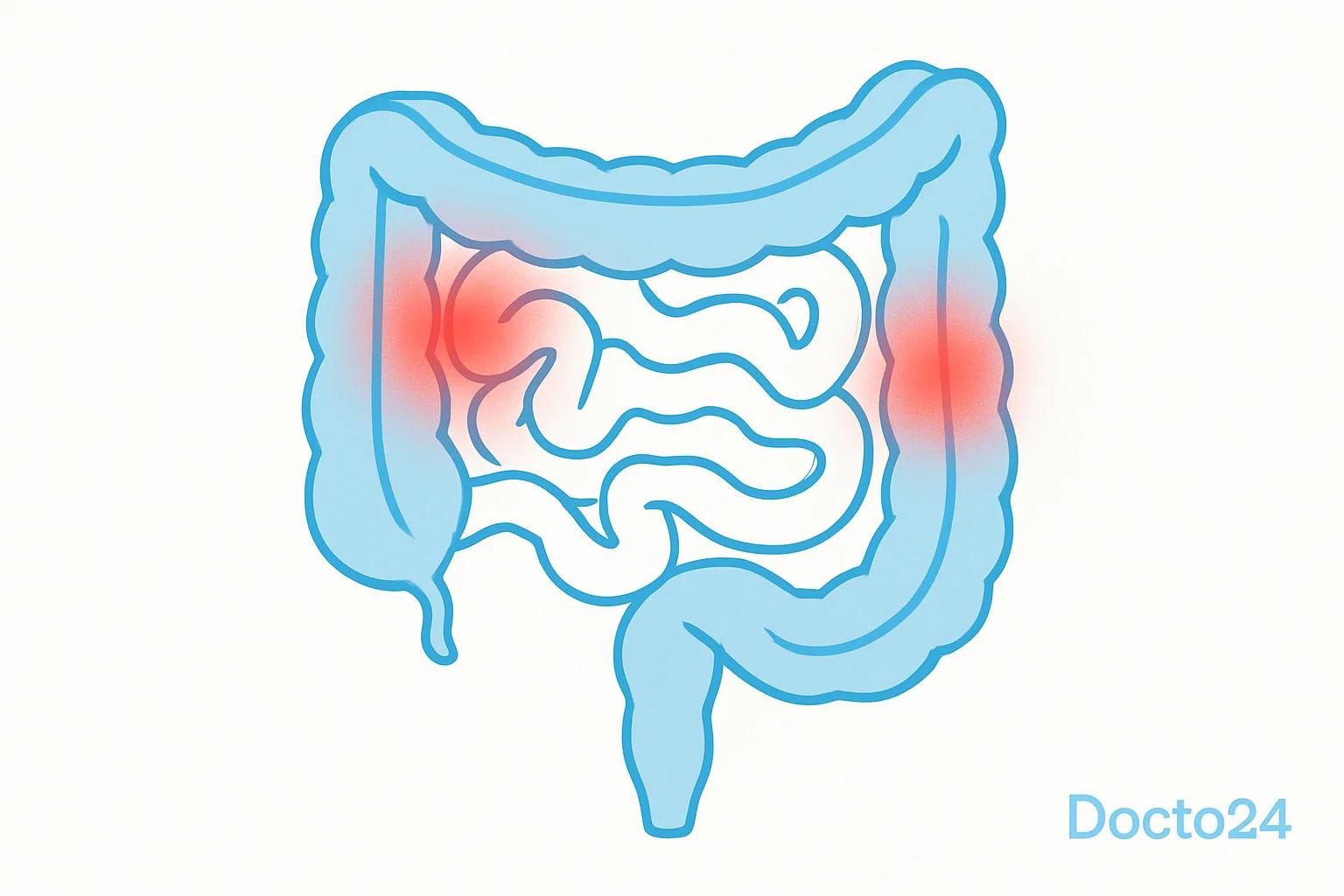
Inflammatory bowel disease (IBD) — Crohn's disease and ulcerative colitis — is a chronic relapsing-remitting inflammatory condition of the gut. Most patients are managed by gastroenterology with mesalamine, immunomodulators (azathioprine, methotrexate), biologics (infliximab, adalimumab, vedolizumab), and short-course steroids during flares. Cannabinoids are sometimes considered for symptom-focused adjunct use — pain, nausea, appetite, sleep — particularly in patients with persistent symptoms despite optimised disease-control therapy. They are not a substitute for inflammation-modifying treatment and they do not replace the gastroenterology team.
What the evidence says
Naftali et al (2013) ran a small RCT in active Crohn's disease showing symptomatic and quality-of-life improvement with inhaled THC-dominant cannabis, though without consistent change in inflammatory markers. Naftali et al (2017) reported similar symptomatic benefit in ulcerative colitis. Couto et al (2023) updated systematic reviews note that cannabinoid therapy in IBD reliably improves patient-reported outcomes (pain, nausea, appetite, quality of life) but does not consistently change endoscopic or biochemical disease activity. The honest summary: cannabinoids are a symptom-management adjunct, not a disease-modifying therapy. Patients still need their biologics or DMARDs.
How the doctor will evaluate you
You will need recent gastroenterology correspondence (ideally including endoscopy results, faecal calprotectin if measured, and current biologic regimen), a clear distinction between disease activity and symptomatic burden, and explicit awareness from the gastroenterology team that cannabinoid adjunct is being considered. The doctor will avoid initiating cannabinoid therapy in a patient with rising calprotectin or active flare without first ensuring the gastroenterology team has reviewed the disease-control plan. CBD-leaning oral oils are typical starting points; the route matters in IBD because inhaled formulations are sometimes contraindicated and oral absorption may be erratic in active small-bowel disease.
When to see a doctor urgently
- Active flare with rising inflammatory markers — disease control comes first, before symptom adjunct
- No gastroenterology team involvement — cannabinoid prescribing in isolation is inappropriate for IBD
- Bowel obstruction, perforation risk, or severe stricturing — emergency care, not telemedicine adjunct
- Severe immunosuppression (high-dose biologics + steroids) — interaction profile needs specific review
If any of the above apply, seek in-person medical care — do not wait for a remote Section 21 consultation.
The South African Section 21 pathway
IBD is reviewed under the SA Section 21 pathway specifically for symptomatic adjunctive use. Applications carry weight when accompanied by current gastroenterology correspondence, a clear disease-activity status, and a documented rationale for adjunctive symptom support. SAHPRA generally treats IBD applications similarly to chronic-pain refractory cases. Authorisations are time-limited; renewal looks at sustained symptomatic benefit alongside maintained disease control on the gastroenterology side.
Frequently asked
- Will medical cannabis stop my IBD flares?
- No. Cannabinoids are not disease-modifying in IBD — they do not reliably change endoscopic inflammation or calprotectin. They can help with pain, nausea, appetite, and sleep alongside your existing biologics or DMARDs. Stopping disease-control therapy in favour of cannabinoids alone is not safe in IBD.
- Can I use this with my biologic (infliximab, adalimumab)?
- Generally yes — there are no major direct pharmacokinetic interactions between cannabinoids and most current IBD biologics. The doctor will still want explicit awareness from your gastroenterology team and will check for interactions with any concurrent immunomodulator (azathioprine, methotrexate).
- I have Crohn's — should I be inhaling cannabis?
- Usually no. Inhaled formulations are not the typical Section 21 route; oral oils or capsules are preferred for IBD because dosing is more predictable and absorption can be tracked. Inhalation also raises pulmonary risk in patients on biologics. The doctor will recommend a route that suits your disease pattern.
- Can it help with the diarrhoea, or just the pain?
- Effects on bowel-frequency are inconsistent. Some patients report fewer stools and reduced urgency, others see no diarrhoea-specific benefit. The most reliable signals in IBD trials are pain reduction, appetite improvement, and quality-of-life gains — not bowel-frequency change. Anti-diarrhoeal management remains the gastroenterology team's domain.
- What about CBD-only oils — is THC necessary for IBD?
- CBD-only regimens are a reasonable starting point and the most common first step in IBD adjunct prescribing. Some patients see meaningful symptom benefit on CBD alone. THC is sometimes added in patients who do not respond to CBD or in those with prominent nausea or appetite loss. The decision is staged — start lower-risk, escalate only as needed.
Related conditions
Glossary — terms used on this page
Quick definitions for terminology referenced above. Each links to a fuller entry.
- CBD (cannabidiol)Non-psychoactive cannabinoid with established use in some seizure disorders and emerging use in anxiety.
- THC (Δ⁹-tetrahydrocannabinol)The principal psychoactive cannabinoid in the cannabis plant.
- Full-spectrum vs isolateExtraction categories: full-spectrum contains the plant’s cannabinoids + terpenes; isolate is purified single-cannabinoid.
- Section 21SAHPRA authorisation for access to unregistered medicines — the primary legal pathway for medical cannabis in SA.
Think this might apply to you? An HPCSA-registered doctor will review your case.
START ELIGIBILITY REVIEWR500 consultation · R400 SAHPRA fee per product · 3–7 days end-to-end