Condition · ICD-11 8A00.0
Parkinson's disease
Reviewed by the Docto24 clinical team · Neurology · Last updated · Published
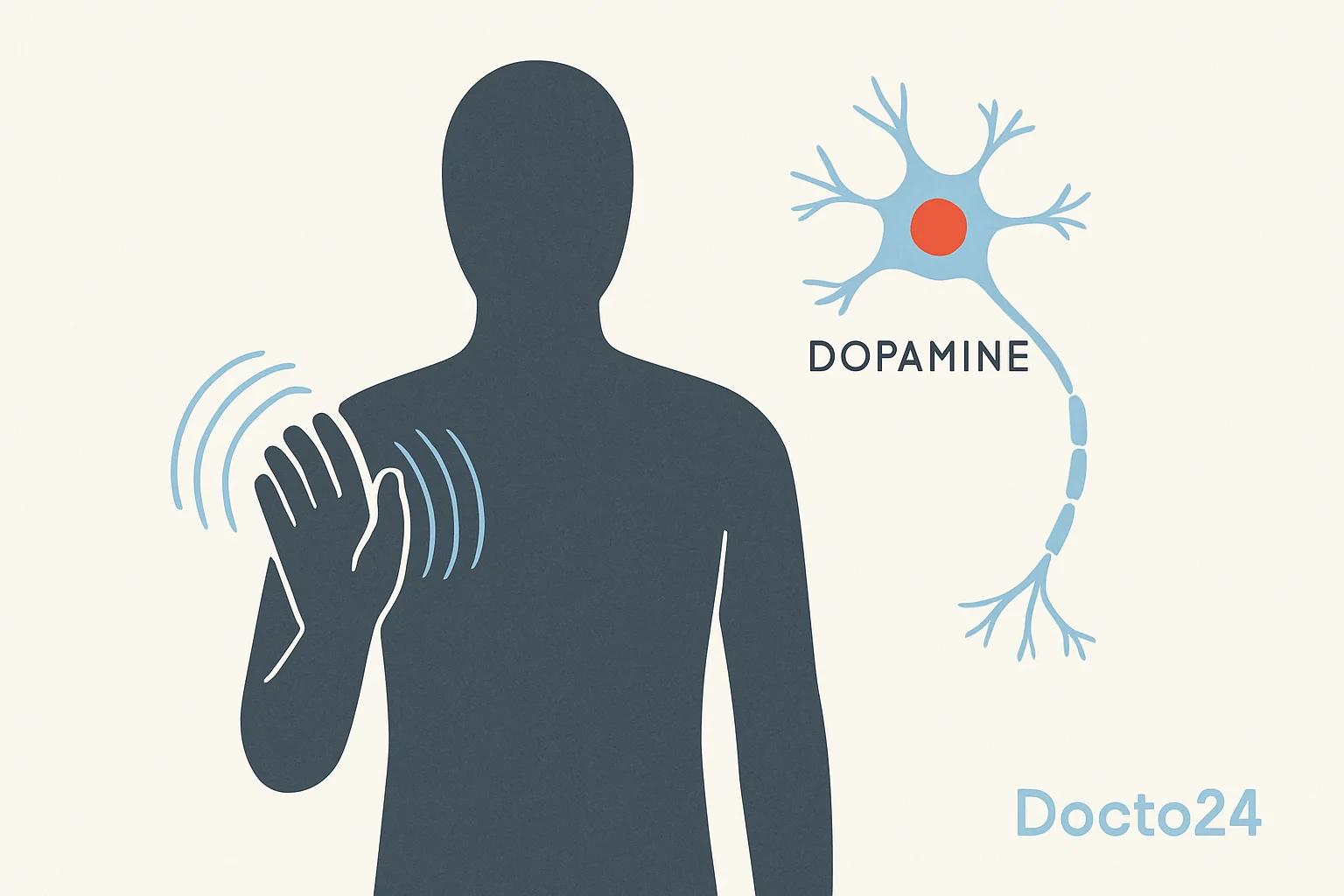
Parkinson's disease is a progressive neurodegenerative condition characterised by motor symptoms (tremor, rigidity, bradykinesia, postural instability) and a wide range of non-motor symptoms — sleep disturbance, anxiety, depression, constipation, pain, and (in advanced disease) cognitive decline and psychosis. The motor symptoms are managed by neurology with levodopa and other dopaminergic agents. Where cannabinoids sometimes have a role is the non-motor side — sleep, anxiety, pain, and treatment-resistant nausea — and even there the evidence is mixed and the safety profile depends heavily on individual disease stage.
What the evidence says
Lotan et al (2014) reported short-term motor and non-motor symptom improvements from inhaled cannabis in a small open-label PD cohort. Chagas et al (2014) RCT examined CBD for PD-related quality of life and showed modest benefit on QoL measures without clear motor effect. Crippa et al (2018) found CBD safe in REM sleep behaviour disorder commonly co-occurring in PD. Movement-disorder society reviews consistently conclude there is insufficient evidence for cannabinoids in PD motor symptoms, but reasonable signal for sleep and anxiety where conventional therapy has failed. The honest summary: motor symptoms are a weak indication; non-motor symptoms in selected patients are a more defensible use case.
How the doctor will evaluate you
You will need recent neurology correspondence, current dopaminergic regimen with on-off-time pattern, an honest cognitive assessment (MMSE or MoCA recent score if available), and clear documentation of what symptom is being targeted. The doctor will look explicitly for hallucinations, delusions, or REM sleep behaviour disorder with concerning features — THC-containing formulations are dangerous in patients with established PD-related psychosis or significant cognitive impairment. CBD-leaning regimens are the safer starting point in PD; THC is added cautiously and usually only in cognitively-intact patients with refractory pain or sleep disturbance.
When to see a doctor urgently
- Established PD psychosis, hallucinations, or delusions — THC contraindicated, exclude before any cannabinoid trial
- Significant cognitive impairment or PD dementia — cannabinoid therapy generally deferred
- Recurrent falls or severe orthostatic hypotension — additive risk with THC; non-cannabinoid management preferred
- Sudden change in motor symptoms or new dyskinesia — neurology review before adjunct adjustment
If any of the above apply, seek in-person medical care — do not wait for a remote Section 21 consultation.
The South African Section 21 pathway
Parkinson's-related Section 21 applications are typically reviewed for non-motor symptom adjuncts (sleep, anxiety, pain) rather than motor-symptom indications. SAHPRA applications are stronger when accompanied by neurology correspondence and a clear statement that cannabinoid therapy is targeted at a specific non-motor symptom not adequately controlled by current management. Authorisations are time-limited and reviewed for both ongoing benefit and emerging safety signals — particularly cognitive decline or new psychotic features.
Frequently asked
- Can cannabinoids help my Parkinson's tremor?
- The evidence for cannabinoids reducing PD motor symptoms — including tremor — is weak. Some patients report subjective improvement, but controlled trials have not shown consistent motor benefit. Levodopa and other dopaminergic agents remain the foundation of motor-symptom management. Cannabinoids are not a replacement.
- Is THC safe in Parkinson's?
- It depends on disease stage. In early, cognitively-intact PD, low-dose THC can sometimes help with sleep or refractory pain. In advanced PD with cognitive decline, hallucinations, or established psychosis, THC is unsafe and can worsen these symptoms substantially. The doctor will assess this carefully before considering any THC component.
- Will this interact with my levodopa?
- There is no major direct pharmacokinetic interaction between cannabinoids and levodopa, but additive sedation and orthostatic effects need attention. The doctor will not change your dopaminergic regimen unilaterally — that stays with your neurologist. The cannabinoid trial sits alongside, with shared monitoring of motor and non-motor effects.
- Will it help my sleep, even if it doesn't help motor symptoms?
- Possibly yes. Sleep disturbance is one of the better-evidenced cannabinoid indications in PD — particularly REM sleep behaviour disorder, where CBD has shown safety signal in small studies. Improved sleep frequently improves daytime function in PD even without motor-symptom change. The doctor will discuss whether sleep is a realistic primary target for your case.
- What is REM sleep behaviour disorder, and how does cannabinoid therapy relate?
- REM sleep behaviour disorder (RBD) is acting out vivid dreams during REM sleep — kicking, shouting, sometimes injuring oneself or a bed-partner. It is common in PD and often pre-dates motor symptoms by years. Crippa et al (2018) showed CBD safety in RBD with potential symptom benefit. RBD is a relatively common reason a Docto24 doctor would consider a CBD trial in PD.
Related conditions
Glossary — terms used on this page
Quick definitions for terminology referenced above. Each links to a fuller entry.
- CBD (cannabidiol)Non-psychoactive cannabinoid with established use in some seizure disorders and emerging use in anxiety.
- THC (Δ⁹-tetrahydrocannabinol)The principal psychoactive cannabinoid in the cannabis plant.
- Dosage titrationGradual stepwise dose-adjustment to find the minimum effective dose with tolerable side effects.
- Section 21SAHPRA authorisation for access to unregistered medicines — the primary legal pathway for medical cannabis in SA.
Think this might apply to you? An HPCSA-registered doctor will review your case.
START ELIGIBILITY REVIEWR500 consultation · R400 SAHPRA fee per product · 3–7 days end-to-end