
Condition · ICD-11 FA20
Rheumatoid arthritis
Reviewed by the Docto24 clinical team · Pain Medicine · Last updated · Published
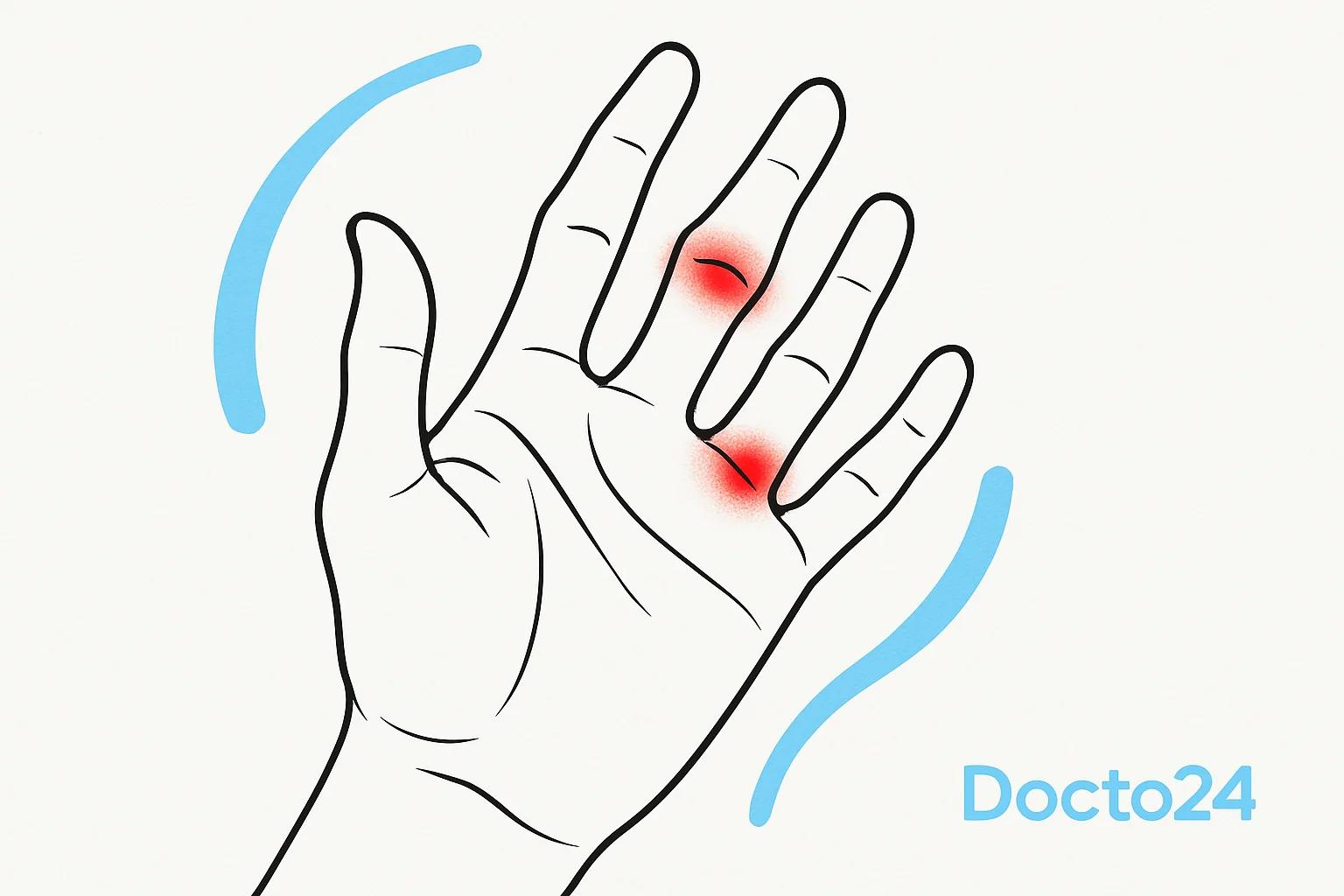
Rheumatoid arthritis (RA) is a chronic systemic autoimmune condition characterised by symmetric inflammatory polyarthritis, often progressing to joint damage if inadequately controlled. The cornerstone of RA management is disease-modifying anti-rheumatic drug (DMARD) therapy — methotrexate, sulfasalazine, leflunomide, and biologics or JAK inhibitors in more severe or refractory disease. Cannabinoids are sometimes considered for adjunctive symptomatic management — pain, sleep, fatigue — particularly where pain persists despite optimised DMARD therapy. They are not disease-modifying and they do not replace immunomodulation.
What the evidence says
Blake et al (2006) ran a small RCT of an oromucosal THC:CBD spray in RA showing modest pain and sleep improvement. Hendricks et al (2019) cohort data found self-reported benefit in pain and quality of life in patients using cannabinoids alongside DMARDs. EULAR 2022 recommendations do not endorse cannabinoids as part of RA disease management but acknowledge they may have a role in selected patients for refractory symptom-burden. The honest summary: the controlled-trial evidence is thin and the case for cannabinoid use is symptom-focused, not disease-modifying. DMARD optimisation comes first.
How the doctor will evaluate you
You will need rheumatology correspondence with your current DMARD regimen, recent disease-activity score (DAS28 or similar) if available, and an honest distinction between active inflammation and chronic post-inflammatory pain. The doctor will not initiate cannabinoid therapy in a patient with rising disease activity or pending DMARD escalation — the appropriate first response there is rheumatology review, not symptom-masking. Cannabinoids may interact with methotrexate via CYP2C9 and with some biologic monitoring; review of concurrent medications is part of the assessment. CBD-leaning regimens are typical starting points for adjunctive use.
When to see a doctor urgently
- Active disease flare with rising inflammatory markers — DMARD adjustment, not cannabinoid adjunct
- No rheumatology team involvement — RA cannot be safely managed without specialist oversight
- Sudden new joint involvement or systemic symptoms — exclude alternative diagnosis
- Concurrent immunosuppression with biologic + methotrexate — pulmonary risk if inhaled route considered
If any of the above apply, seek in-person medical care — do not wait for a remote Section 21 consultation.
The South African Section 21 pathway
Rheumatoid arthritis is reviewed under the SA Section 21 pathway as a refractory chronic-pain indication. Applications carry weight when supported by rheumatology correspondence, current DMARD regimen, and clear documentation that pain or sleep disturbance persists despite optimised disease control. Authorisations are time-limited; renewal hinges on documented symptomatic benefit alongside maintained disease control on the rheumatology side.
Frequently asked
- Will cannabinoids replace my methotrexate?
- No. Methotrexate (or whatever DMARD you are on) controls the underlying disease — cannabinoids do not. Stopping DMARD therapy in favour of cannabinoid alone risks irreversible joint damage. Any DMARD adjustment must come from your rheumatologist, not from cannabinoid adjunct prescribing.
- Can I use this if I am on a biologic?
- Usually yes — there are no major direct interactions between cannabinoids and current RA biologics. The doctor will still want awareness from your rheumatology team and will check for interactions with concurrent medications (notably methotrexate, where CYP2C9 review is relevant).
- How long should I trial it before deciding it works?
- For RA-related pain and sleep, the doctor will usually re-evaluate at 6–8 weeks of stable dosing against pain-score, sleep-quality, and functional measures. If there is no measurable benefit by then, the regimen is changed or discontinued — not persisted with hopefully.
- Will it slow joint damage?
- No. Joint damage in RA is driven by ongoing inflammatory activity, which DMARDs and biologics target directly. Cannabinoids do not modify this disease process. Patients hoping that cannabinoid use will let them reduce DMARD therapy without joint progression are working on a false premise — that is not what the evidence supports.
- Can I take it alongside NSAIDs and prednisone?
- Generally yes. Cannabinoids do not significantly interact with prednisone or most NSAIDs. The doctor will check for additive GI risk if you are on long-term high-dose NSAIDs and may flag concerns about steroid-related complications (sleep, mood, glycaemic control) where cannabinoid effects could compound.
Related conditions
Glossary — terms used on this page
Quick definitions for terminology referenced above. Each links to a fuller entry.
- CBD (cannabidiol)Non-psychoactive cannabinoid with established use in some seizure disorders and emerging use in anxiety.
- THC (Δ⁹-tetrahydrocannabinol)The principal psychoactive cannabinoid in the cannabis plant.
- CYP450Family of liver enzymes that metabolise many drugs, including cannabinoids — source of many clinically relevant interactions.
- Dosage titrationGradual stepwise dose-adjustment to find the minimum effective dose with tolerable side effects.
Think this might apply to you? An HPCSA-registered doctor will review your case.
START ELIGIBILITY REVIEWR500 consultation · R400 SAHPRA fee per product · 3–7 days end-to-end